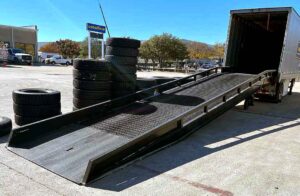
 Loading equipment is one of the most heavily used components in a distribution environment. But they don’t always receive the same routine attention as forklifts, trailers, pallet jacks, or other equipment that typically have a scheduled maintenance program. Yard ramps, dock boards, and steel platforms support thousands of pounds of equipment, cargo, and forklift traffic every day. When they’re functioning properly, they keep freight moving and crews safe. But when they’re not, they can quickly become the source of bottlenecks, OSHA citations, costly repairs, and preventable downtime.
For facilities that rely on portable or stationary yard ramps, routine inspections and preventive maintenance are essential. Whether you’re running a high-volume distribution center or a smaller warehouse without a permanent loading dock, your team needs a consistent process to ensure ramps operate exactly as they were engineered to. Here are nine essential maintenance steps we recommend for ramps, boards, and platforms.
Inspect the Ramp Structure for Stress, Wear, and Impact Damage
Steel yard ramps are built for rugged, daily use, but over time, even the strongest structures can incur fatigue or impact damage. Start each shift, or at a minimum, each week, with a visible structural inspection.
Look for:
- Bent structural members, especially near the top transition plate or bottom approach.
- Cracks along weld seams or joints, particularly in high-stress areas.
- Deformation in side rails or curbs, which ensure forklift containment.
- Sagging or uneven areas along the incline or level-off section.
Any visible structural damage should be addressed immediately. Continued use can multiply the problem and compromise the ramp’s rated capacity.
Examine Decking and Grating Surfaces
The decking and steel grating take the most direct impact from forklift tires, debris, and moisture. Brazos ramps use heavy-gauge diamond plate and serrated steel grating designed for maximum traction, but these surfaces must be kept in good condition.
Inspect for:
- Worn diamond pattern or flattened traction points.
- Rust patches, especially at seams where moisture collects.
- Grating that has shifted, separated, or loosened from the frame.
- Buildup of debris, pallet chips, shrink-wrap, or oils that can reduce traction.
A clean, well-maintained surface isn’t just a performance issue—it’s a safety requirement for forklift operations on inclines.
Test Hydraulic Components (Mobile Yard Ramps)
For mobile ramps, the hydraulic system is essential to adjusting ramp height and safely engaging trailers. A neglected hydraulic system is one of the most common causes of unexpected downtime.
Your hydraulic checklist should include:
- Inspect for fluid leaks near cylinders, hoses, and fittings.
- Ensure the pump handle or power unit operates smoothly.
- Check that the ramp raises and lowers without hesitation or uneven movement.
- Verify safety locks or mechanical stops engage properly.
- Wipe down components to prevent contamination and corrosion.
Hydraulic service should be performed at least annually—and more frequently in high-volume operations.
Evaluate Wheels, Tires, Axles, and Mobility Hardware
Mobile ramps depend on wheels, axles, and tow bars to move safely across the yard.
Examine:
- Tire condition, inflation (if pneumatic), and tread wear.
- Solid rubber wheels for chunking or cracking.
- Axle alignment to prevent uneven loading.
- Tow bar pins, chains, and locking mechanisms for secure transport.
If your ramp is moved frequently across gravel, asphalt, or uneven surfaces, increase the inspection frequency.
Review Dock Board, Plate, and Platform Hardware
Distribution facilities often combine yard ramps with steel platforms or dock boards to create a full loading system.
Your maintenance checks should include:
- Hinge pins for wear or loose movement.
- Locking legs or supports for secure placement.
- Lifting loops or forklift pockets for integrity and visibility.
- Bolt-on curbs, railings, and safety chains for proper fit and alignment.
If your team moves platforms often, look for damage from forklifts bumping or scraping the edges. That’s one of the most common repair requests Brazos sees.
Verify Load Capacities and Safety Labels Are Legible
Keep in mind that labels fade, stickers wear off, and equipment gets repainted. But load capacity ratings and operating instructions must always be visible and readable.
As part of your monthly checklist:
- Replace worn or illegible capacity labels.
- Confirm warning decals are intact.
- Make sure instructions for use, storage, and securing the ramp are present where operators can actually see them.
Missing labels aren’t just a compliance risk. They can lead to dangerous assumptions about ramp capacity.
Ensure Proper Securing of Ramps to Trucks or Docks
An unsecured ramp is a major hazard. Crews should review securing procedures at least monthly, and whenever onboarding new staff.
Check that:
- Safety chains are present, undamaged, and compatible with your trailers or docks.
- The ramp lip plate sits flush and engages properly.
- Operators understand how to verify stable trailer height before entry.
- Forklift operators know how to enter and exit at the correct angle and speed.
Taking a few extra seconds during setup helps prevent hundreds of hours of potential downtime later.
Schedule Preventive Downtime for Thorough Inspections
No equipment can run nonstop without showing signs of wear. Facilities should plan quarterly or semiannual preventive downtime to conduct a full inspection.
During scheduled downtime:
- Perform deep cleaning of surfaces and joints.
- Repaint areas with surface corrosion.
- Lubricate moving parts, hinge points, and axles.
- Replace worn traction plates or grating sections.
- Review the full ramp-to-platform interface for alignment and fit.
A preventive maintenance window is always cheaper than a shutdown caused by a mid-shift ramp failure.
Train and Retrain Staff on Safe Ramp Operation
Even the strongest ramp can’t compensate for poor training.
Include periodic refreshers on:
- Correct forklift approach angles and speed control.
- Safe travel on inclines and level-offs.
- Procedures for icy, wet, or low-visibility yard conditions.
- Proper securing and unsecuring of ramps.
- Emergency procedures for hydraulic failures or trailer movement.
Training is one of the most overlooked, but most impactful, parts of maintaining ramp longevity.
How Brazos Manufacturing Supports Your Yard Ramp Maintenance Efforts
Brazos Manufacturing’s team doesn’t just build yard ramps. They are a partner in your distribution facility’s safety strategy. Customers rely on their engineering and customer-service experts for guidance on evaluating unique loading challenges, selecting the right ramp style, capacity, and length for their application, as well as recommendations on wear-part replacement intervals and long-term maintenance strategies.
If your distribution warehouse needs help evaluating your current ramps or planning future upgrades, the Brazos team is here to assist. Schedule a Free Consultation today!