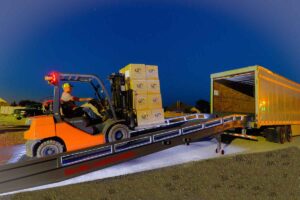
 High-volume distribution facilities live and breathe by throughput. Every minute of loading time matters, and anything that slows the movement of pallets, trailers, or forklifts creates compounding delays across an entire shift. In these environments, the yard ramp is a critical link in your material flow. Choosing the right ramp can mean the difference between a smooth, continuous operation and a bottleneck that drags down productivity.
For facilities using portable or stationary steel yard ramps as part of their primary loading workflow, the selection process should go deeper than basic specs. Capacity, length, surface material, mobility, and docking height all play a direct role in how efficiently freight moves from ground level to trucks, trailers, or docks. Here, we’ll break down the key criteria that high-volume warehouses should consider when searching for a yard ramp for throughput and safety.
Build for Real-World Forklift Loads by Getting Capacity Right
In large-scale distribution centers, ramps must support heavy, repeated forklift traffic without flexing, shifting, or degrading under pressure. Capacity should account not just for the forklift’s rated load, but for the combined live load of the forklift, the operator, and the heaviest palletized load the facility typically moves.
A simple rule to follow is to multiply the forklift capacity by three for four-wheel lifts and by four for three-wheelers. This ensures the ramp can handle dynamic loading forces, uneven weight distribution, and the added strain of traveling on an incline.
Case Example:
A beverage distributor upgraded to higher-capacity Brazos steel ramps when transitioning from mixed-case pallets to full beverage pallets on reach trucks. The increased ramp capacity prevented flexing during peak shifts and improved operator confidence and travel speed on the incline.
Optimize Loading Speed and Operator Control with Longer Incline Length
The length of the ramp directly affects the incline angle, and therefore forklift efficiency. For rapid-processing warehouses, a longer ramp (such as a 36′ option with a level-off section) provides:
- A gentler incline, allowing faster and safer forklift travel
- Better load stability when moving fragile or top-heavy freight
- A smoother transition from incline to trailer level
- Reduced wear on drive components and brakes
Shorter ramps can work in low-frequency operations, but for facilities moving dozens of trailers daily, incline length becomes a throughput multiplier.
Case Example:
A home-improvement distributor noticed slowdowns whenever operators moved oversized pallets of flooring and tile up a short incline ramp. The steep grade forced forklifts to climb slowly and reduced load stability, especially with top-heavy items. After switching to a longer 36′ Brazos ramp with a 6′ level-off section, operators were able to maintain smoother travel speeds and keep loads more stable while entering the trailer. The improvement shaved several seconds off each cycle and reduced product damage during peak-volume shifts.
Choose a Surface Material That Delivers Reliable Daily Traction
Distribution centers operate in all conditions, including dust, water, oils, pallet debris, and temperature fluctuations. The surface material you choose for a yard ramp directly affects safety and loading speed.
Heavy-gauge diamond plate and serrated steel grating, like those on Brazos ramps, create consistent tire traction and channel debris away from the forklift’s path. This helps to reduce spin-outs, sliding, and slowdown during busy shifts.
Case Example:
A 24/7 logistics provider replaced an older smooth-deck ramp with serrated grating. The improvement in traction cut forklift travel time by several seconds per load, translating to hours saved per week.
Select the Yard Ramp Mobility Style That Fits Your Workflow
High-volume warehouses often need multiple loading zones, seasonal flexibility, or the ability to shift operations across the yard. Mobile yard ramps allow teams to reposition equipment quickly using a tow bar or forklift pockets. This is especially valuable when handling:
- Staggered trailer arrivals
- High trailer turnover
- Multiple carriers using different dock heights
- Outdoor loading during peak seasons
Stationary ramps, on the other hand, are ideal when the facility has a dedicated high-throughput loading lane that never moves. These ramps create a consistent, predictable interface for operators and can integrate directly with platforms or interior material flow.
Case Example:
A national e-commerce fulfillment center frequently shifts its outbound staging area to accommodate fluctuating volumes and seasonal carrier schedules. Their team replaced two fixed-position ramps with Brazos mobile steel ramps that can be moved with a tow bar in minutes. The ability to reposition ramps allowed supervisors to open temporary loading lanes during peak hours, reducing trailer dwell time and eliminating the daily congestion that previously backed up forklift travel routes.
Achieve Perfect Fleet Alignment Using Flexible Dock Heights
For the fastest loading cycles, the ramp must consistently align with the trailers or dock heights your facility sees most often. Adjustable-height mobile ramps offer flexibility, but you still want to ensure the ramp’s operating range comfortably covers:
- Standard 48″–52″ trailer heights
- Drop-deck trailers
- Box trucks with lower bed heights
- Raised permanent docks
If freight movement involves multiple trailer styles, a broader height-adjustment range prevents delays caused by re-leveling or repositioning.
Case Example:
A consumer-goods distributor receiving a mix of over-the-road trailers, box trucks, and occasional cargo vans struggled with misalignment using their older, limited-range ramp. After upgrading to a Brazos hydraulic mobile ramp with a wider operating height range, operators no longer had to pause loading to repeatedly re-level the ramp. Smooth, consistent alignment reduced transition times between trailers and prevented the delays that previously occurred when working with mixed fleets.
Integrate Ramps that Maintain Optimal Internal Material Flow
The right yard ramp accelerates throughput by aligning with the entire flow of goods, not just the trailer interface. High-activity warehouses should consider how the ramp interacts with:
- Staging lanes
- Conveyor lines
- Cross-docking areas
- Return-material areas
- Traffic patterns for forklifts and pallet jacks
A well-placed, properly sized ramp becomes part of a smooth, continuous loop. A poorly placed or mismatched ramp becomes the choke point.
Case Example:
A high-volume cross-dock facility redesigned its internal material flow to reduce forklift travel distance. Their new layout included a Brazos stationary ramp positioned directly in line with inbound pallet staging lanes. This eliminated a previously required 90-degree turn at the trailer interface, allowing operators to drive straight from staging to trailer. The repositioned ramp became a seamless extension of the building’s flow path, shaving seconds off each load cycle and adding up to hours saved each week.
Why Choose Brazos Yard Ramps For Your High-Volume Distribution Warehouse?
Brazos Manufacturing builds steel yard ramps engineered specifically for the realities of heavy, repeated use in busy distribution centers.
Our engineering team regularly consults with warehouse managers to size ramps for real-world forklift fleets, design custom configurations around traffic flow, and ensure capacity, incline, and mobility match the demands of high-volume freight environments. Whether your operation needs stationary loading solutions, mobile flexibility, or a ramp that integrates into a broader platform system, Brazos provides equipment built to keep freight moving. Let us do the same for you! Schedule a Free Consultation today.